What you'll learn
- Why remote hiring breaks traditional interview loops
- Async-first interview design
- The virtual onsite: a 4-hour structured format
- Time-zone-aware scheduling that respects candidates
- Background checks and right-to-work across borders
- Compensation philosophy: location-based vs. global bands
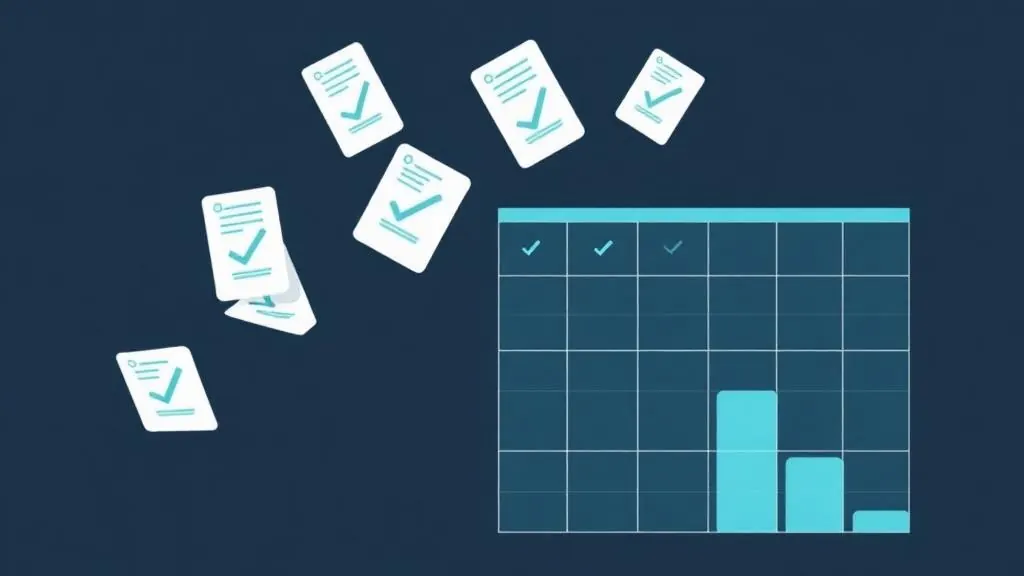
Remote hiring has matured from a pandemic-era workaround into a permanent operating model for most technology companies, yet the majority of hiring teams are still running remote processes that are functionally in-office processes with a Zoom link substituted for a conference room. The result is avoidable: timezone mismatches that stretch loops to six weeks, async interviews that feel impersonal and produce weak signal, and onboarding experiences that leave remote hires disconnected before they are even productive. The companies getting remote hiring right in 2026 are not using more technology — they are using different processes that are designed from first principles for a distributed context. This playbook covers the full remote hiring lifecycle: interview design for async-first organizations, structuring virtual onsites that produce the same quality of signal as in-person loops, navigating right-to-work and compensation complexity across borders, and building remote onboarding experiences that actually connect new hires to the team without a shared physical space.
Why remote hiring breaks traditional interview loops
Quick answer
Traditional interview loops are built on synchronous coordination assumptions that do not hold in distributed teams: everyone is in the same timezone, interviewers can debrief over lunch, and candidates travel to a single location for a full-day assessment. Remote hiring invalidates all three assumptions simultaneously, which is why copy-pasting an in-office loop into a video call format produces a consistently degraded experience.
The coordination problem is the most immediate failure mode. A four-stage interview loop that takes two weeks in a co-located company takes four to six weeks in a distributed one because scheduling across timezones requires 48 to 72 hours of lead time per stage instead of 24 hours, and multi-interviewer panels in different regions require either early mornings or late evenings that consistently get rescheduled. Every rescheduling event is a candidate experience risk and a potential dropout point. Research from Remote's 2024 Global Hiring Report found that distributed companies running synchronous-only interview loops experienced 23% higher candidate dropout rates than comparable in-office companies — a gap attributable almost entirely to scheduling friction rather than process quality.
The signal quality problem is subtler but equally consequential. In-person interviews provide ambient cues — office environment, team energy, how people interact informally — that candidates use to evaluate cultural fit and team health. Remote loops strip those cues entirely, leaving candidates to make decisions based on structured interview content alone. This makes every intentional signal — how quickly emails are answered, how well prepared interviewers are, how clearly the role and team are described — dramatically more important than it would be in person. Teams that have adapted to this reality by designing structured candidate communication sequences and providing richer role context in pre-interview materials report significantly higher offer-acceptance rates for remote roles than those who simply schedule video calls and hope the culture comes through.
Async-first interview design
Quick answer
Async-first interview design treats asynchronous stages as the default and synchronous sessions as the exception reserved for high-signal evaluation moments. This approach compresses elapsed loop time, eliminates timezone-driven scheduling failures, and — when executed well — produces comparable signal quality to fully synchronous processes.
The async interview model typically runs like this: a candidate records a structured video response to four to six role-specific questions within a 48 to 72-hour window, at a time that works for them. Reviewers watch the recordings on their own schedule and submit scorecard ratings before a brief synchronous debrief among the panel. The recorded format captures vocal delivery, clarity of thinking, and response structure — signals that are difficult to assess through written screening alone — while eliminating the mutual scheduling burden of a live screen call. Hirevue's 2024 benchmarking data shows async video screens have 40% higher completion rates than live phone screens for roles with international candidate pools, because candidates in non-overlapping timezones can complete them without sacrificing sleep or work time. The tradeoff is the inability to ask follow-up questions in real time, which means async screens work best as a qualification layer — filtering for clear communicators and role-fit — rather than a deep-dive evaluation tool.
InCruiter's IncBot is built for this async-first model, enabling teams to configure question sets, time limits, and evaluation rubrics for automated async video screens that route to human reviewers with AI-generated initial scorecards. The platform handles candidate scheduling autonomously — candidates receive a link, complete the interview at their convenience, and the hiring team reviews scored recordings within 24 hours. For a detailed look at the full async and AI video interview landscape, the AI video interview platform guide covers evaluation frameworks for choosing the right async tool based on role type, volume, and signal requirements.
Distributed companies running synchronous-only interview loops experience 23% higher candidate dropout rates than comparable in-office companies, per Remote's 2024 Global Hiring Report — making async-first design the single highest-impact structural change for global talent acquisition teams.
The virtual onsite: a 4-hour structured format
Quick answer
The virtual onsite — a structured half-day of video interviews that replaces the traditional in-person loop day — is the highest-stakes experience design challenge in remote hiring. When done well, it produces equivalent signal quality to an in-person loop while being accessible to candidates anywhere in the world. When done poorly, it is six hours of back-to-back Zoom fatigue with no coherent arc.
A well-designed four-hour virtual onsite follows a deliberate structure: a 30-minute orientation session with the recruiter covering the day's format and logistics, followed by three 45-minute evaluation sessions with distinct signal targets (technical depth, cross-functional collaboration, and strategic thinking or values alignment), followed by a 30-minute role and company deep-dive with the hiring manager, and finally a 30-minute open Q-and-A where the candidate drives the agenda. The breaks between sessions — 10 to 15 minutes each — are not padding; they are recovery time that meaningfully improves candidate performance in later sessions and reduces the anxiety-driven false-negative rate that Zoom-fatigue loops produce. Research from a 2023 candidate experience study by Indeed found that virtual onsites designed with explicit recovery time between sessions produced 18% higher candidate satisfaction scores and 12% lower interviewer-noted 'performance degraded in later sessions' rates.
InCruiter's IncVid provides the structured session management layer that makes this format operationally reliable: interviewers are auto-briefed with candidate context and evaluation rubrics before each session, transitions between sessions are managed through the platform rather than by the candidate navigating separate calendar links, and the entire onsite is recorded with session-level timestamps for debrief reference. Teams using IncVid for virtual onsites report a consistent improvement in debrief quality — because reviewers can reference specific 60-second clips rather than 45-minute recordings — which compresses decision time and improves inter-rater alignment on borderline candidates.
Time-zone-aware scheduling that respects candidates
Quick answer
Time-zone-aware scheduling is not just a logistics problem — it is a candidate respect problem. Consistently offering candidates only slots during your business hours, regardless of where they are located, sends a clear signal about how the company thinks about distributed work before the person has even started.
The standard for time-zone-aware scheduling is that candidates should never be asked to interview during hours that fall outside 7 AM to 9 PM in their local timezone. For a hiring team in New York interviewing a candidate in Singapore, that constraint eliminates the vast majority of overlapping business hours — which means synchronous stages need to be either compressed into the narrow overlap window or replaced with async alternatives. The practical implementation requires interviewers to explicitly mark their timezone in their scheduling profiles and to flag willingness or unwillingness to take 7 AM or 9 PM slots, so the scheduling system can find genuine mutual availability rather than defaulting to recruiter-convenient times. Automated scheduling tools that display candidate-local time prominently — rather than hiding it in a small timezone label — reduce scheduling errors by 35 to 45% according to Calendly's own benchmark data.
InCruiter's IncFeed includes timezone-native scheduling with automatic local-time conversion for both candidate-facing booking pages and interviewer calendar invitations. The platform flags interview slots that fall outside recommended candidate hours and suggests async alternatives when synchronous availability gaps exceed 48 hours — a practical implementation of the respect principle that removes the burden from recruiters to manually check timezone implications for every candidate. For global hiring teams managing candidates across 10 or more timezones simultaneously, this automation is not a convenience feature; it is the operational foundation that makes a distributed hiring model viable at scale.
Background checks and right-to-work across borders
Quick answer
Cross-border background verification and right-to-work compliance are the most frequently underestimated operational challenges in global remote hiring. What takes two business days in a domestic hire can take three to four weeks internationally, and getting it wrong exposes the company to both legal liability and new-hire start-date delays that damage the experience before day one.
Right-to-work requirements vary not just by country but by employment structure. A candidate hired as a full-time employee in Germany requires different documentation than the same candidate engaged through a Professional Employer Organization or an Employer of Record service in the same country. The most common error is treating EOR-engaged workers under a domestic employment compliance framework — which can expose the hiring company to co-employment risk in jurisdictions with strict employment law. The operational solution is to build country-specific compliance checklists into the offer workflow, triggered automatically when a candidate's location is recorded in the ATS, rather than relying on recruiters to remember jurisdiction-specific requirements. Background screening vendors with genuine international coverage — Sterling, First Advantage, and Certn are the market leaders — can handle criminal, education, and employment verification in 150-plus countries with local legal frameworks respected.
The candidate experience dimension of cross-border compliance is frequently ignored: candidates in countries with less developed background screening infrastructure often find the process confusing, document-heavy, and anxiety-inducing. Providing a clear, country-specific checklist at the point of offer acceptance — explaining what will be requested, why, and in what timeframe — reduces candidate anxiety and accelerates document submission significantly. Teams that have built this transparency into their global offer workflow report 30 to 40% reductions in time-to-clear for international background checks, because candidates arrive at the screening provider with complete documentation rather than submitting piecemeal over multiple follow-up requests.
Virtual onsites designed with explicit 10 to 15-minute recovery breaks between sessions produce 18% higher candidate satisfaction scores and 12% lower 'performance degraded in later sessions' rates compared to back-to-back Zoom loops, based on Indeed's 2023 candidate experience research.
Compensation philosophy: location-based vs. global bands
Quick answer
The compensation philosophy decision for remote roles — location-based pay tied to local cost of living, or global bands tied to role level and market rate — is one of the most consequential talent brand decisions a distributed company makes. There is no universally correct answer, but there is a clear obligation to be consistent and transparent about whichever approach you choose.
Location-based pay is the most common approach among large technology companies: Stripe, GitLab, and Twitter have all published their location-adjustment frameworks, which typically apply a cost-of-living multiplier to a base compensation band tied to a reference city (usually San Francisco or New York). The practical benefit is alignment with local market rates, which improves competitiveness in each geography. The documented downside is team-cohesion friction: when two engineers doing identical work on the same team earn materially different salaries because one lives in Austin and one in Lisbon, it creates resentment that surfaces in engagement surveys and occasionally in public commentary. Gitlab's 2024 Remote Work Report found that location-based pay was the single most frequently cited driver of compensation dissatisfaction among fully remote workers, even in companies where the framework was openly published.
Global bands — where compensation is tied to role level and responsibilities rather than employee location — are increasingly favored by companies that prioritize team equity and want to hire from lower-cost geographies without signaling pay inequity. The tradeoff is higher nominal labor costs in markets where local rates are significantly below the global band floor. Whichever philosophy you adopt, the implementation requirement is identical: disclose the framework to candidates before offer stage, explain how it is applied, and provide enough context that candidates can evaluate whether the approach aligns with their values. This transparency, paired with the communication practices from candidate experience best practices, converts a potentially contentious topic into a differentiating signal of organizational maturity.
Onboarding remotely without the watercooler
Quick answer
Remote onboarding fails most often in the first 30 days for one reason: new hires cannot acquire the informal context — the unwritten norms, the key relationships, the organizational dynamics — that in-office employees absorb through proximity. Effective remote onboarding must deliberately engineer opportunities for that context transfer.
The 30-60-90 day structured onboarding framework is the evidence-based standard for remote new hires. Day 1 to 30 focuses on technical setup, product and process comprehension, and establishing the five to eight key relationships that will define the new hire's work for the next year — manager, immediate team members, and two to three cross-functional partners. Day 31 to 60 shifts to first deliverables, active participation in team rituals (sprint planning, retros, design reviews), and feedback loops with the manager. Day 61 to 90 is ownership: the new hire should be driving at least one meaningful project independently, with a formal 90-day review that surfaces any gaps in technical access, social integration, or role clarity before they calcify into retention risk. Gallup's 2024 employee engagement research found that remote employees who experienced structured 90-day onboarding were 42% less likely to report feeling isolated at six months than those who received only administrative onboarding.
The relationship-building layer is the most frequently neglected component. Remote new hires who do not have meaningful relationships with at least three colleagues within 30 days are significantly more likely to disengage quietly in months two and three. Practical mechanisms include 25-minute virtual coffee chats scheduled by the recruiter or HR coordinator during the first two weeks (removing the awkward burden of the new hire initiating), assigned onboarding buddies who are distinct from the manager and explicitly tasked with informal context-sharing, and team-wide async channels where new hires are encouraged to share background and interests before their start date. InCruiter's IncVid facilitates early relationship-building by enabling recorded intro sessions that new hires can share with the full team before their first day — a small but measurable improvement in day-one connection quality that several customers of the InCruiter platform have cited as a standout differentiator in their remote onboarding programs.
Frequently asked questions
Common questions about remote work and how InCruiter helps teams solve them.
InCruiter Editorial Team
AI Hiring Research · Interview Intelligence · Enterprise Talent Strategy
The InCruiter editorial team covers AI-driven hiring, interview intelligence, and modern talent acquisition strategy. Our guides draw on platform data from 2,000+ hiring teams, conversations with talent leaders, and published research in industrial-organizational psychology.